Relationship Between Nutritional Status and Hemoglobin, Blood Glucose, Waist Circumference, and Upper Arm Circumference in High School Adolescents in Purwakarta
DOI:
https://doi.org/10.58184/miki.v4i3.1042Keywords:
adolescent, anthropometry, blood glucose, hemoglobin, nutritional statusAbstract
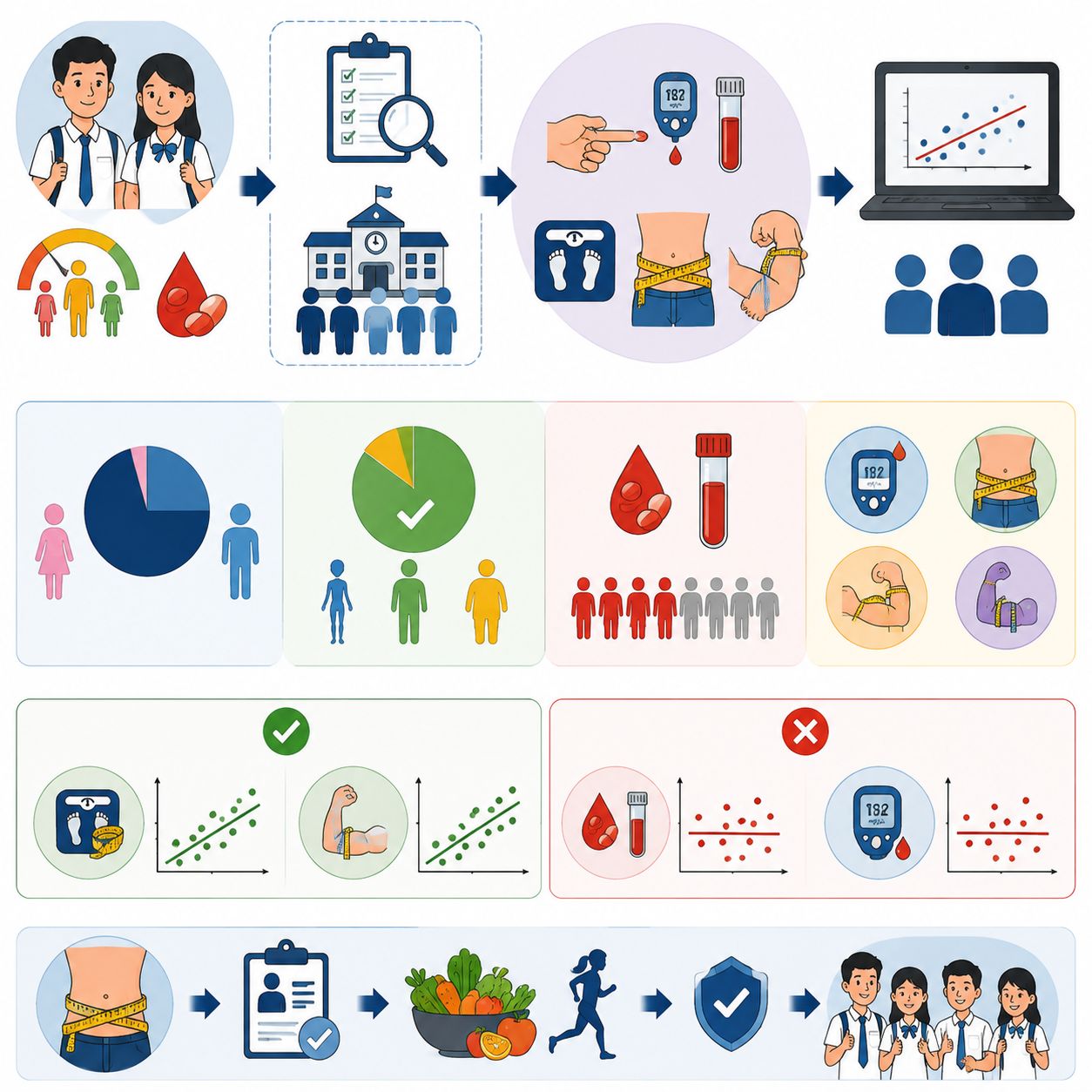
Adolescents are an age group vulnerable to nutritional problems that may affect overall health. According to the 2023 Indonesian Health Survey (SKI), the prevalence of overweight and obesity among adolescents aged 16–18 years was 11.7% among males and 12.6% among females, while the prevalence of anemia among individuals aged 15–24 years was 15.5%. These conditions remain a public health concern requiring regular monitoring. This study aimed to analyze the association between nutritional status based on Body Mass Index-for-Age (BMI-for-age) and hemoglobin (Hb) levels, random blood glucose (RBG), waist circumference (WC), and mid-upper arm circumference (MUAC) among high school students in Purwakarta. This study employed an analytical observational design with a cross-sectional approach involving 52 students of MAN 1 Purwakarta selected using total sampling. Data were collected through a single measurement and analyzed using Spearman’s correlation test at a 95% confidence level. Most respondents were female (96.2%) and had normal nutritional status (75.0%), while 19.2% were classified as overweight. The mean Hb level was 12.04 ± 2.03 g/dL, with 48.1% of respondents classified as anemic. The mean RBG, WC, and MUAC were 115.88 ± 13.40 mg/dL, 71.80 ± 7.77 cm, and 24.69 ± 3.11 cm, respectively. Nutritional status was significantly associated with WC (r = 0.598; p < 0.001) and MUAC (r = 0.679; p < 0.001), whereas Hb (r = −0.067; p = 0.638) and RBG (r = 0.139; p = 0.326) were not significantly associated with nutritional status. These findings indicate that routine monitoring of nutritional status and anthropometric indicators is important among adolescents as an early detection measure for the risk of central obesity.
Downloads
References
Almatsier, S. (2001). Prinsip Dasar Ilmu Gizi. Gramedia Pustaka Utama.
Assa, Y. A., Bolang, A. S. L., & Kaseke, M. M. (2022). Risk factors associated with blood hemoglobin levels in adolescent girls in the East Ratahan District, Southeast Minahasa Regency. Scholars Journal of Applied Medical Sciences, 10(12). https://doi.org/10.36347/sjams.2022.v10i12.049
Athala, T. W., & Khofiyah, N. (2025). The relationship between nutritional status and diet patterns and anemia in adolescent girls at MA Jamilurrahman Bantul Yogyakarta. Midwiferia Jurnal Kebidanan, 11(1), 9–17. https://doi.org/10.21070/midwiferia.v11i1.1712
Ayudia, F., & Amran, A. (2020). Pengaruh Status Gizi dengan Kadar Hemoglobin Remaja Putri. Jurnal Kesehatan Saintika Meditory, 2(2), 40–43. https://doi.org/10.30633/jsm.v2i2.508
Dieny, F. F., Jauharany, F. F., Tsani, A. F. A., & Fitranti, D. Y. (2020). Peningkatan Visceral Adiposity Index Berhubungan dengan Sindrom Metabolik Remaja Obesitas. Jurnal Gizi Klinik Indonesia, 16(4), 143–151. https://doi.org/10.22146/ijcn.51465
Faerch, K., Vistisen, D., Pacini, G., Torekov, S. S., Johansen, N. B., Witte, D. R., Jonsson, A., Pedersen, O., Hansen, T., Lauritzen, T., Jørgensen, M. E., Ahrén, B., & Holst, J. J. (2016). Insulin resistance is accompanied by increased fasting glucagon and delayed glucagon suppression in individuals with normal and impaired glucose regulation. Diabetes, 65(11), 3473–3481. https://doi.org/10.2337/db16-0240
Fauziah, N., Baharja, K. T., Putri, N. P. V., Pujiyani, H., Ferdinan, C. S., Muttabi, R. A., Fa'ni, D., Rosanti, N. D., Syakura, A., & Mustofa, A. (2024). The relationship of nutritional status and anemia status in adolescent women in Sampang District. International Journal of Research and Review, 11(3), 131–140. https://doi.org/10.52403/ijrr.20240317
Habtegiorgis, S. D., Petrucka, P., Telayneh, A. T., Getahun, D. S., Getacher, L., Alemu, S., & Birhanu, M. Y. (2022). Prevalence and associated factors of anemia among adolescent girls in Ethiopia: A systematic review and meta-analysis. PLOS ONE, 17(3), e0264063. https://doi.org/10.1371/journal.pone.0264063
Hikmah, Y., Supriatiningrum, D. N., & Rahma, A. (2023). Hubungan Pola Makan dan Status Gizi terhadap Kadar Hemoglobin Mahasiswi Fakultas Kesehatan Universitas Muhammadiyah Gresik. Ghidza Media Jurnal, 4(2), 161–176. https://doi.org/10.30587/ghidzamediajurnal.v4i2.4629
Jannah, S. M., Fauzia, Y., Purwitasari, D., Rahman, M. R., Sari, N. W., Rahmatia, A., Nuraini, O. D., Salsabila, O., Welerebun, N. H., Arisandi, J., & Layyinatusshyfa, H. (2024). Hubungan Status Gizi dengan Kadar Glukosa Darah Sewaktu Remaja di Posyandu Resik Padukuhan Glidag. Prosiding Seminar Nasional Penelitian dan Pengabdian kepada Masyarakat LPPM Universitas 'Aisyiyah Yogyakarta, 2. https://proceeding.unisayogya.ac.id/index.php/prosemnaslppm/article/view/842
Kementerian Kesehatan Republik Indonesia. (2020). Peraturan Menteri Kesehatan Republik Indonesia Nomor 2 Tahun 2020 tentang Standar Antropometri Anak. Kementerian Kesehatan Republik Indonesia.
Kementerian Kesehatan Republik Indonesia. (2023). Survei Kesehatan Indonesia (SKI) 2023 dalam Angka. Kementerian Kesehatan Republik Indonesia.
Kementerian Kesehatan Republik Indonesia. (2025). Pedoman Nasional Pelayanan Klinis Tata Laksana Obesitas Dewasa (HK.01.07/MENKES/509/2025). Kementerian Kesehatan Republik Indonesia.
Kim, M., & Kim, J. (2022). Cardiometabolic risk factors and metabolic syndrome based on severity of obesity in Korean children and adolescents: Data from the Korea National Health and Nutrition Examination Survey 2007–2018. Annals of Pediatric Endocrinology & Metabolism, 27(4), 289–299. https://doi.org/10.6065/apem.2142230.115
Krishnan, V., Zaki, R. A., Nahar, A. M., Jalaludin, M. Y., & Majid, H. A. (2021). The longitudinal relationship between nutritional status and anaemia among Malaysian adolescents. The Lancet Regional Health – Western Pacific, 15, 100228. https://doi.org/10.1016/j.lanwpc.2021.100228
Kumala, M., Lontoh, S. O., & Novendy. (2021). Hubungan Status Gizi, Lingkar Pinggang, dan Profil Lipid terhadap Hipertensi pada Usia Produktif Berpenghasilan Rendah. Jurnal Muara Sains, Teknologi, Kedokteran dan Ilmu Kesehatan, 5(1), 205–214. https://doi.org/10.24912/jmstkik.v5i1.9930
Luthfiya, L., Pibriyanti, K., Nabawiyah, H., Fathimah, F., & Ummah, S. K. (2024). Faktor-Faktor yang Berpengaruh terhadap Lingkar Perut pada Remaja Putri. Amerta Nutrition, 8(1), 74–81. https://doi.org/10.20473/amnt.v8i1.2024.74-81
Malonda, N. S. H., Sanggelorang, Y., Pondagitan, A. S., & Salsabila, S. (2026). MUAC and hemoglobin among adolescent girls: Implications for community-based nutritional interventions. Public Health of Indonesia, 12(1), 137–143. https://doi.org/10.36685/phi.v12i1.1409
Pradika, J., Sumarna, F., Amelia, L., Purnamawati, D. A., Patama, K., & Amrullah, S. (2024). Gambaran Status Gizi Berdasarkan Indeks Massa Tubuh dan Lingkar Lengan Atas. Jurnal Riset Keperawatan dan Kesehatan, 1(5), 189–196. https://doi.org/10.71203/jrkk.v1i1.8
Pranoto, H. H., & Dewianti, A. (2023). Status Gizi sebagai Determinan Kadar Glukosa Darah pada Remaja. Prosiding Seminar Nasional dan Call for Paper Kebidanan Universitas Ngudi Waluyo, 2(2), 847–853. https://callforpaper.unw.ac.id/index.php/semnasdancfpbidanunw/article/view/648
Rah, J. H., Melse-Boonstra, A., Agustina, R., van Zutphen, K. G., & Kraemer, K. (2021). The triple burden of malnutrition among adolescents in Indonesia. Food and Nutrition Bulletin, 42(1_suppl), S1–S5. https://doi.org/10.1177/03795721211007114
Rahman, M. J., Rahman, M. M., Sarker, M. H. R., Islam, M. R., Hossain, M. A., Hossain, M. S., Khan, M. A., Hasan, M. M., & Rahman, M. M. (2024). Prevalence and influencing factors with knowledge, attitude, and practice toward anemia among school-going adolescent girls in rural Bangladesh. PLOS ONE, 19(11), e0313071. https://doi.org/10.1371/journal.pone.0313071
Ramadani, A. A., & Anggraeni, F. D. (2023). Hubungan antara Indeks Massa Tubuh (IMT) dengan Gula Darah pada Remaja di MA Muhammadiyah 7 Yogyakarta. Kampurui Jurnal Kesehatan Masyarakat, 6(2), 86–90. https://doi.org/10.55340/kjkm.v6i2.1313
Rindorindo, W. G., Sapulete, I. M., & Pangkahila, E. A. (2020). Hubungan antara Indeks Massa Tubuh dan Lingkar Perut dengan Tekanan Darah pada Siswa SMA Kristen 2 Binsus Tomohon. Medical Scope Journal, 1(2), 38–43. https://doi.org/10.35790/msj.1.2.2020.27715
Riyanto, R., Lestari, G. I., Dayani, T. R., & Herbawani, C. K. (2023). Prediktor Faktor Menstruasi dan Asupan Fe terhadap Peningkatan Kejadian Anemia pada Remaja Putri. Jurnal Kesehatan Metro Sai Wawai, 16(1), 32–41. https://doi.org/10.26630/jkm.v16i1.3879
Sanjaya, R., & Sari, S. (2020). Hubungan Status Gizi dengan Kadar Hemoglobin pada Remaja Putri di Madrasah Aliyah Darul Ulum Panaragan Jaya Tulang Bawang Barat Tahun 2019. Jurnal Maternitas Aisyah (JAMAN AISYAH), 1(1), 1–8. https://journal.aisyahuniversity.ac.id/index.php/Jaman/article/view/4
Sejati, A., Azka, A., & Yunitasari, L. (2024). Indeks Massa Tubuh terhadap Kadar Haemoglobin, Glukosa Darah, dan Tekanan Darah Systole pada Remaja Putri. Antigen: Jurnal Kesehatan Masyarakat dan Ilmu Gizi, 2(1), 89–99. https://doi.org/10.57213/antigen.v2i1.199
Setyaningrum, Y. I., Wulandari, I., & Purwanza, S. W. (2021). Literatur Review Penyebab dan Upaya Pencegahan Anemia pada Remaja Putri. Journal of Noncommunicable Diseases, 3(2), 84–100. https://doi.org/10.52365/jond.v3i2.858
Sompie, K. A., Mantik, M. F. J., & Rompis, J. (2015). Hubungan antara Status Gizi dengan Kadar Hemoglobin pada Remaja Usia 12–14 Tahun. e-CliniC, 3(1), 150–156. https://doi.org/10.35790/ecl.v3i1.6756
Trisnawati, Y. (2026). Analisis Status Gizi terhadap Hasil Pemeriksaan GDS pada Remaja SMA Purwokerto. Jurnal Bina Cipta Husada: Jurnal Kesehatan Dan Science, 22(1), 60–67. https://jurnal.stikesbch.ac.id/index.php/jurnal/article/view/301
Triwinarni, C., Hartini, T. N. S., & Susilo, J. (2017). Hubungan Status Gizi dengan Kejadian Anemia Gizi Besi (AGB) pada Siswi SMA di Kecamatan Pakem. Nutrisia, 19(1), 61–67. https://doi.org/10.29238/jnutri.v19i1.49
Utami, S. B., & Rialihanto, M. P. (2024). Perbedaan Lingkar Lengan Atas (LILA) Berdasarkan Kategori Status Gizi pada Remaja Putri di Kabupaten Kulonprogo. Jurnal Gizi dan Kesehatan, 16(2), 259–268. https://doi.org/10.35473/jgk.v16i2.579
World Health Organization. (2024). Guideline on haemoglobin cutoffs to define anaemia in individuals and populations. World Health Organization. https://www.who.int/publications/i/item/9789240088542
Downloads
Published
How to Cite
Issue
Section
License
Copyright (c) 2026 Suci Amalia, Putri Amalina Nafisa, Sri Pani, Yuni Putri Pertiwi

This work is licensed under a Creative Commons Attribution-ShareAlike 4.0 International License.