Water-Drinking Hydrotherapy for Blood Glucose and Anxiety Outcomes in Patients with Type 2 Diabetes Mellitus: A Quasi-Experimental Study
DOI:
https://doi.org/10.58184/miki.v4i3.1110Keywords:
type 2 diabetes mellitus, oral water therapy, blood glucose level, anxiety, HARSAbstract
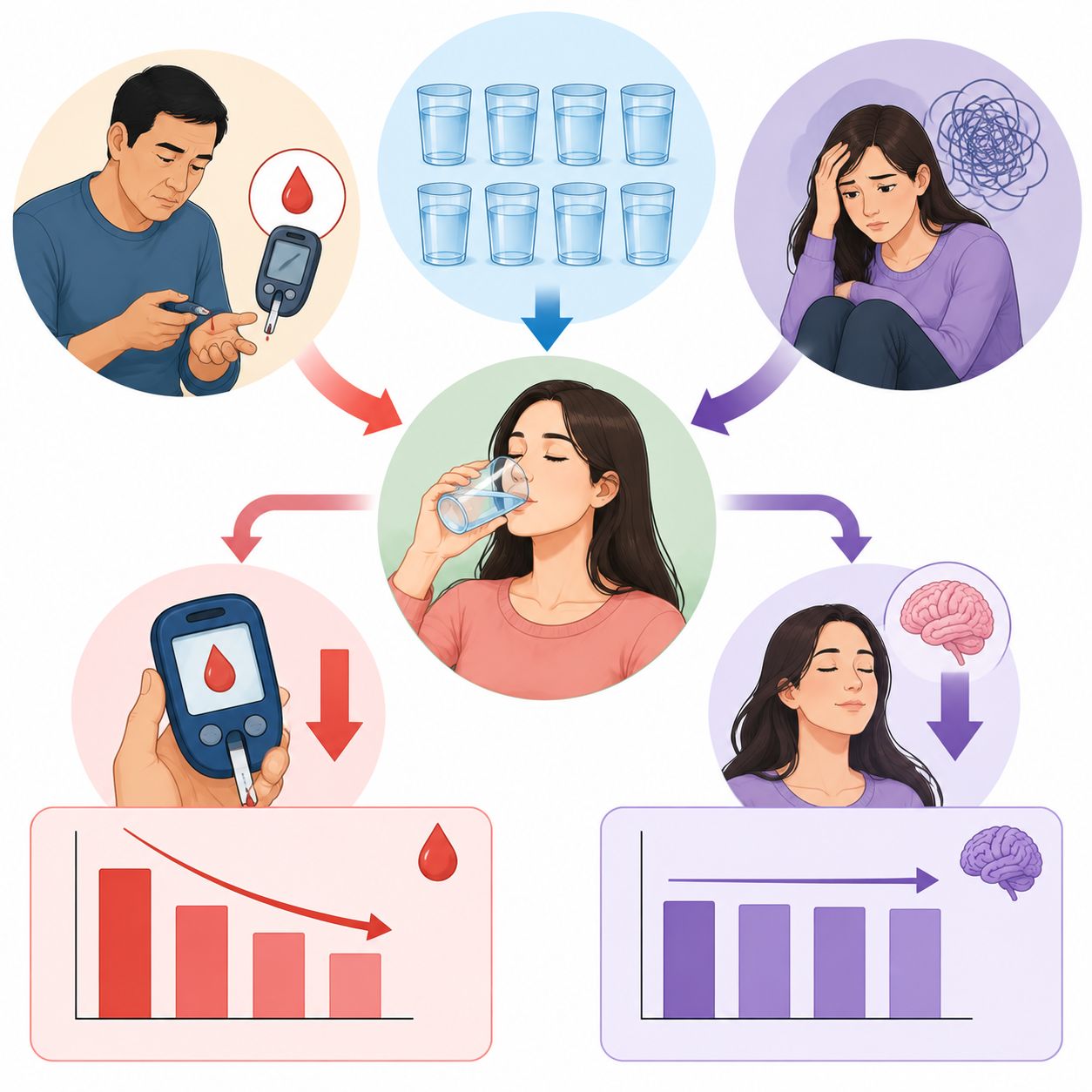
Type 2 diabetes mellitus is a chronic disease characterized by hyperglycemia and may be accompanied by psychological problems, including anxiety. Oral water therapy is a simple complementary intervention that may support blood glucose control; however, its effects on blood glucose levels and anxiety require further investigation. This study aimed to determine the effectiveness of oral water therapy in reducing blood glucose levels and anxiety among patients with type 2 diabetes mellitus at Sriwijaya General Hospital, Palembang. This quantitative study employed a quasi-experimental pretest-posttest design. A total of 42 respondents were divided into a blood glucose group and an anxiety group, with 21 respondents in each group. The intervention consisted of consuming eight 200-mL glasses of water daily for seven days. Blood glucose levels were measured using a glucometer, while anxiety was assessed using the Hamilton Anxiety Rating Scale (HARS). Data were analyzed using the paired-samples t-test and Cohen's d. Blood glucose levels decreased across all measurement days, from 232.7 to 218.2 mg/dL on day 1, from 218.9 to 204.8 mg/dL on day 3, from 203.5 to 191.5 mg/dL on day 5, and from 189.8 to 177.4 mg/dL on day 7. All changes were statistically significant (p < 0.001), with very large effect sizes (Cohen's d = 2.907–3.739). In contrast, anxiety scores did not show a statistically significant change (p > 0.05), with very small to small effect sizes. Oral water therapy may support blood glucose control as a complementary intervention but did not demonstrate a significant effect on anxiety.
Downloads
References
Amiri, S., & Behnezhad, S. (2019). Diabetes and anxiety symptoms: A systematic review and meta-analysis. International Journal of Psychiatry in Medicine. Advance online publication. https://doi.org/10.1177/0091217419837407
Brunkwall, L., Ericson, U., Nilsson, P. M., & Enhörning, S. (2020). High water intake and low urine osmolality are associated with favorable metabolic profile at a population level: Low vasopressin secretion as a possible explanation. European Journal of Nutrition, 59(8), 3715–3722. https://doi.org/10.1007/s00394-020-02202-7
Carroll, H. A., & James, L. J. (2019). Hydration, arginine vasopressin, and glucoregulatory health in humans: A critical perspective. Nutrients, 11(6), Article 1201. https://doi.org/10.3390/nu11061201
Cousins, A. L., Young, H. A., Thomas, A. G., & Benton, D. (2019). The effect of hypo-hydration on mood and cognition is influenced by electrolyte in a drink and its colour: A randomised trial. Nutrients, 11(9), Article 2002. https://doi.org/10.3390/nu11092002
ElSayed, N. A., Aleppo, G., Aroda, V. R., Bannuru, R. R., Brown, F. M., Bruemmer, D., Collins, B. S., Hilliard, M. E., Isaacs, D., Johnson, E. L., Kahan, S., Khunti, K., Leon, J., Lyons, S. K., Perry, M. L., Prahalad, P., Pratley, R. E., Seley, J. J., Stanton, R. C., Young-Hyman, D., & Gabbay, R. A. (2023). Facilitating positive health behaviors and well-being to improve health outcomes: Standards of Care in Diabetes—2023. Diabetes Care, 46(Suppl. 1), S68–S96. https://doi.org/10.2337/dc23-S005
Enhörning, S., Brunkwall, L., Tasevska, I., Ericson, U., Persson Tholin, J., Persson, M., Lemetais, G., Vanhaecke, T., Dolci, A., Perrier, E. T., & Melander, O. (2019). Water supplementation reduces copeptin and plasma glucose in adults with high copeptin: The H2O metabolism pilot study. The Journal of Clinical Endocrinology & Metabolism, 104(6), 1917–1925. https://doi.org/10.1210/jc.2018-02195
Hakam, N., Guzman Fuentes, J. L., Nabavizadeh, B., Sudhakar, A., Li, K. D., Nicholas, C., Lui, J., Tahir, P., Jones, C. P., Bent, S., & Breyer, B. N. (2024). Outcomes in randomized clinical trials testing changes in daily water intake: A systematic review. JAMA Network Open, 7(11), e2447621. https://doi.org/10.1001/jamanetworkopen.2024.47621
Janbozorgi, N., Allipour, R., Djafarian, K., Shab-Bidar, S., Badeli, M., & Safabakhsh, M. (2021). Water intake and risk of type 2 diabetes: A systematic review and meta-analysis of observational studies. Diabetes & Metabolic Syndrome: Clinical Research & Reviews, 15(4), Article 102156. https://doi.org/10.1016/j.dsx.2021.05.029
Johnson, E. C., Bardis, C. N., Jansen, L. T., Adams, J. D., Kirkland, T. W., & Kavouras, S. A. (2017). Reduced water intake deteriorates glucose regulation in patients with type 2 diabetes. Nutrition Research, 43, 25–32. https://doi.org/10.1016/j.nutres.2017.05.004
Lemetais, G., Melander, O., Vecchio, M., Bottin, J. H., Enhörning, S., & Perrier, E. T. (2018). Effect of increased water intake on plasma copeptin in healthy adults. European Journal of Nutrition, 57(5), 1883–1890. https://doi.org/10.1007/s00394-017-1471-6
Mersha, A. G., Tollosa, D. N., Bagade, T., & Eftekhari, P. (2022). A bidirectional relationship between diabetes mellitus and anxiety: A systematic review and meta-analysis. Journal of Psychosomatic Research, 162, Article 110991. https://doi.org/10.1016/j.jpsychores.2022.110991
Sedaghat, G., Montazerifar, F., Keykhaie, M. A., Karajibani, M., Shourestani, S., & Dashipour, A. (2021). Effect of pre-meal water intake on the serum levels of copeptin, glycemic control, lipid profile and anthropometric indices in patients with type 2 diabetes mellitus: A randomized, controlled trial. Journal of Diabetes and Metabolic Disorders, 20(1), 171–177. https://doi.org/10.1007/s40200-020-00724-9
Smith, K. J., Deschênes, S. S., & Schmitz, N. (2018). Investigating the longitudinal association between diabetes and anxiety: A systematic review and meta-analysis. Diabetic Medicine, 35(6), 677–693. https://doi.org/10.1111/dme.13606
Tanaka, R., Shibayama, T., Sugimoto, K., & Hidaka, K. (2020). Diabetes self-management education and support for adults with newly diagnosed type 2 diabetes mellitus: A systematic review and meta-analysis of randomized controlled trials. Diabetes Research and Clinical Practice, 169, Article 108480. https://doi.org/10.1016/j.diabres.2020.108480
Upsher, R., Onabajo, D., Stahl, D., Ismail, K., & Winkley, K. (2021). The effectiveness of behavior change techniques underpinning psychological interventions to improve glycemic levels for adults with type 2 diabetes: A meta-analysis. Frontiers in Clinical Diabetes and Healthcare, 2, Article 699038. https://doi.org/10.3389/fcdhc.2021.699038
Vanhaecke, T., Perrier, E. T., & Melander, O. (2021). A journey through the early evidence linking hydration to metabolic health. Annals of Nutrition and Metabolism, 76(Suppl. 1), 4–9. https://doi.org/10.1159/000515021
Winkley, K., Upsher, R., Stahl, D., Pollard, D., Brennan, A., Heller, S. R., & Ismail, K. (2020). Psychological interventions to improve glycemic control in adults with type 2 diabetes: A systematic review and meta-analysis. BMJ Open Diabetes Research & Care, 8(1), e001150. https://doi.org/10.1136/bmjdrc-2019-001150
World Health Organization. (2024, November 14). Diabetes. https://www.who.int/news-room/fact-sheets/detail/diabetes
Downloads
Published
How to Cite
Issue
Section
License
Copyright (c) 2026 Dewi Aryani, Aris Citra Wisuda, Dian Emiliasari, Rinda Suciarti, Citra Suraya, Risdayanti Raharjeng

This work is licensed under a Creative Commons Attribution-ShareAlike 4.0 International License.