Family Disaster Preparedness Level in Sihikkit Village, Onan Ganjang District, 2026
DOI:
https://doi.org/10.58184/miki.v4i3.1100Keywords:
disaster, family, preparedness, family preparednessAbstract
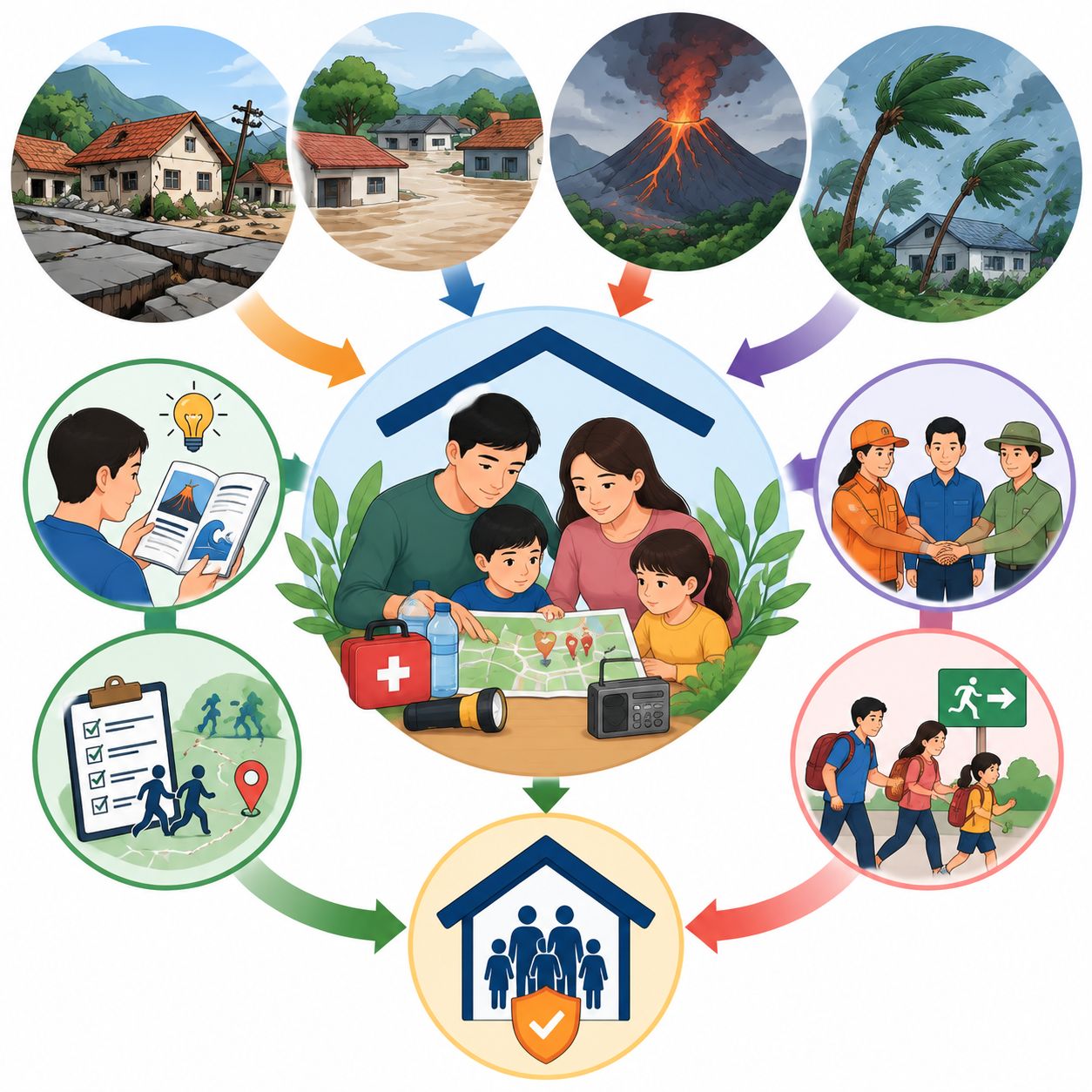
Family preparedness is an important effort to reduce the risks and impacts associated with disasters. Inadequate family preparedness may increase the risk of fatalities, environmental damage, health problems, and material losses when disasters occur. Adequate preparedness is necessary to enable families to take prompt, appropriate, and well-directed actions during emergency situations. This study aimed to describe the level of family preparedness for disasters in Sihikkit Village, Onan Ganjang District, in 2026. A descriptive research design with a quantitative approach was employed. The study population comprised all families in Sihikkit Village, Onan Ganjang District, with a sample of 57 respondents selected using purposive sampling. The research instrument was a family preparedness questionnaire consisting of 16 yes-or-no questions. Data were analyzed using univariate analysis and presented as frequency distributions. The results showed that the majority of respondents were categorized as moderately prepared, comprising 45 respondents (78.9%), followed by 11 respondents (19.3%) who were highly prepared and 1 respondent (1.8%) who was inadequately prepared. Factors associated with family preparedness included knowledge of disaster hazards, preparedness to develop a family contingency plan, support from personal networks, and family practices and participation in disaster preparedness activities. The study concludes that the level of family preparedness for disasters in Sihikkit Village, Onan Ganjang District, in 2026 was categorized as moderate. Community members are encouraged to strengthen preparedness through regular disaster education, training, and simulations to minimize disaster impacts and enhance families' capacity to respond independently to emergency situations.
Downloads
References
Ahmad, S. L., Ahsan, & Fathoni, M. (2018). Factorial analysis related to family preparedness facing disaster impact in Ternate City of Maluku Utara Province. Journal of Nursing Science Update (JNSU), 6(1), 108–123. https://doi.org/10.21776/ub.jik.2018.006.01.11
Andi, S., & Dwi, N. (2025). Buku ajar keperawatan bencana (T. Muhammad, Ed.; 1st ed.). Deepublish.
Anifahtun, Findayani, A., Tjahjono, H., & Hanafi, F. (2025). Pengaruh Tingkat Pendidikan terhadap Kesiapsiagaan Masyarakat dalam Menghadapi Bencana Longsor di Desa Tengklik Kecamatan Tawangmangu. Edu Geography, 13(2), 104–116. https://doi.org/10.15294/edugeo.v11i2.69710
Badan Nasional Penanggulangan Bencana. (2026). Infografis bencana tahun 2026. https://bnpb.go.id/infografis/infografis-bencana-tahun-2026
Buston, E., Pardosi, S., Septiyanti, & Efendi, P. (2021). Pengaruh Pelatihan terhadap Keterampilan Kesiapsiagaan Manajemen Bencana Keluarga di Daerah Pesisir Pantai Kota Bengkulu. Gorontalo Journal of Public Health, 4(2), 72–77. https://doi.org/10.32662/gjph.v4i2.1808
Centre for Research on the Epidemiology of Disasters. (2025). EM-DAT: The International Disaster Database. Centre for Research on the Epidemiology of Disasters (CRED). https://www.emdat.be
Farilya, M., & Nurmansyah. (2024). Hubungan Sikap dengan Kesiapsiagaan Keluarga Menghadapi Bencana: A Cross-Sectional Study. Jurnal Kesehatan Komunitas, 15(1), 57–65. https://doi.org/10.54630/jk2.v15i1.332
Maulana, A. T., & Andriansyah, A. (2024). Mitigasi Bencana di Indonesia. COMSERVA: Jurnal Penelitian dan Pengabdian Masyarakat, 3(10), 3996–4012. https://doi.org/10.59141/comserva.v3i10.1213
Ruman, R., Nanlohy, W. D., Botanri, A. A. A., & Pisty, K. (2026). Analisis Kesiapsiagaan Keluarga dalam Menghadapi Bencana Gempa Bumi. CENDEKIA: Jurnal Ilmu Pengetahuan, 6(2), 967–977. https://doi.org/10.51878/cendekia.v6i2.9332
Sasmito, N. B., & Prawito. (2023). Faktor Hubungan Kesiapsiagaan Keluarga dalam Menghadapi Dampak Bencana. Journal of Education Research, 4(1), 81–91. https://doi.org/10.37985/jer.v4i1.129
Sinaga, V. (2025, November 29). Bupati Humbang Hasundutan pimpin rapat terbatas, tanggap bencana. RRI.co.id. https://rri.co.id/sibolga/info-pemda/2007375/bupati-humbang-hasundutan-pimpin-rapat-terbatas-tanggap-bencana
Susanti, H. (2021). Pengetahuan dan Kesiapsiagaan Mahasiswa Diploma III Keperawatan dalam Menghadapi Bencana Gempa Bumi dan Tsunami. NASUWAKES: Jurnal Kesehatan Ilmiah, 14(2), 87–95.
Syahputra, M. R., Setiawan, A., Fathudin, Y., Agustiyowati, T. H. R., & Syagitta, M. (2024). Tingkat Pengetahuan Kepala Keluarga terhadap Kesiapsiagaan Menghadapi Bencana Gempa Bumi. Jurnal Keperawatan Indonesia Florence Nightingale, 4(1), 36–41. https://doi.org/10.34011/jkifn.v4i1.2156
Taha, N., Ottay, R. I., & Wariki, W. M. V. (2022). Gambaran Pengetahuan, Sikap, dan Tindakan Mahasiswa Program Studi Pendidikan Dokter Fakultas Kedokteran Universitas Sam Ratulangi terhadap Kesiapsiagaan Bencana Alam. Jurnal Kedokteran Komunitas dan Tropik, 10(2), 429–434.
Tambunan, S. C., & Rantung, G. A. J. (2024). Hubungan Pengetahuan dan Keterampilan Bencana Mahasiswa dengan Kesiapsiagaan Keluarga Menghadapi Bencana. Journal of Telenursing (JOTING), 6(1), 930–938. https://doi.org/10.31539/joting.v6i1.9624
Unmehopa, Y. F. (2025). Faktor-faktor yang Berhubungan dengan Kesiapsiagaan Masyarakat dalam Menghadapi Bencana Tsunami. Journal of Health Research Science, 5(1), 110–118. https://doi.org/10.34305/jhrs.v5i1.1598
Downloads
Published
How to Cite
Issue
Section
License
Copyright (c) 2026 Gryttha Tondang, Indra Hizkia Perangin-angin, Sry Rumondang Sitindaon, Elsa Mei Ana Sihombing

This work is licensed under a Creative Commons Attribution-ShareAlike 4.0 International License.